
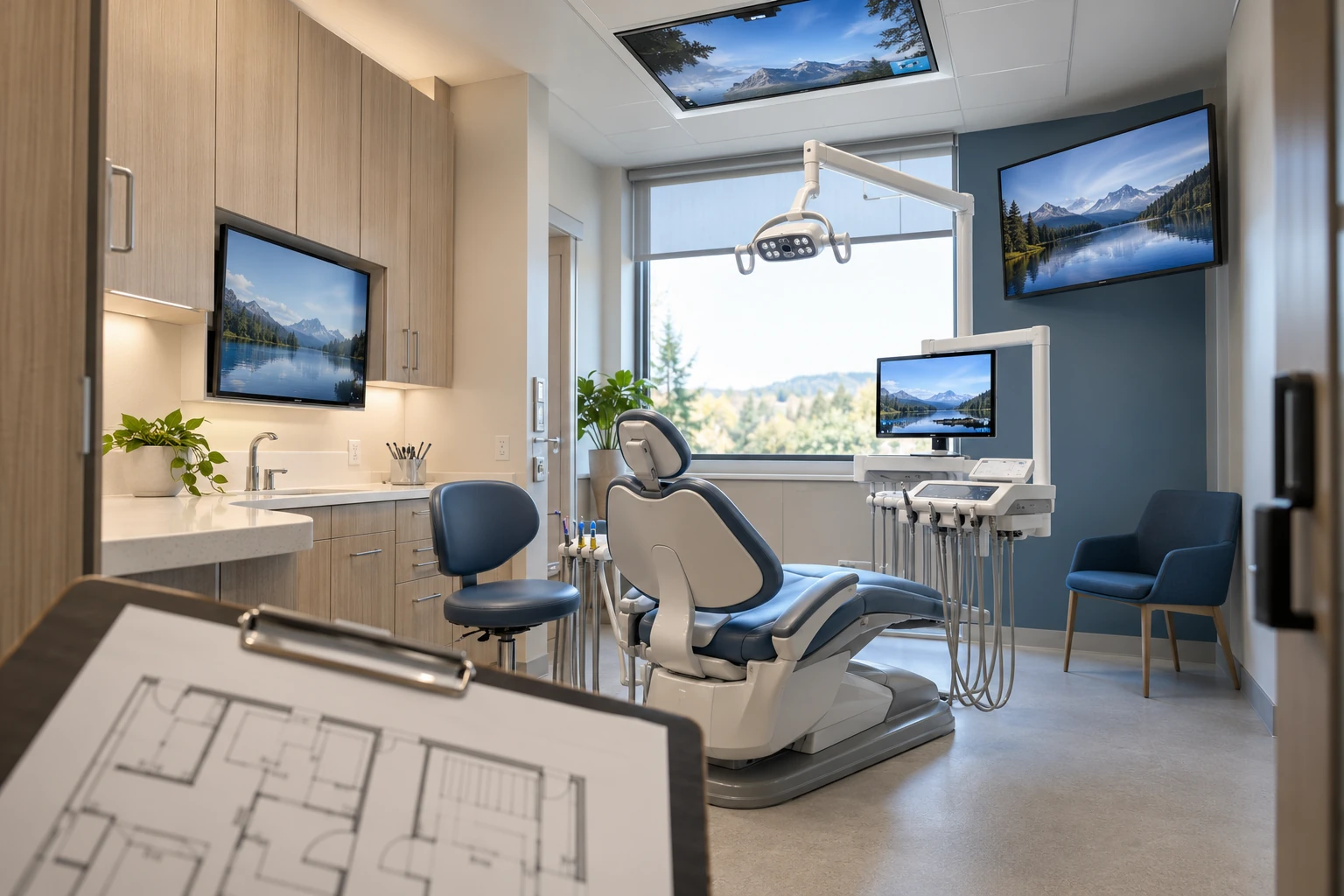
Make the dependencies visible early.
An opening plan involves more than a delivery date for computers. Connectivity, room layouts, cabling, power, accounts, phones, imaging and practice software may depend on different providers. A change in one workstream can affect another.
Begin with a responsibility matrix. Name the business decision maker and the owner of each requirement: carrier, landlord, construction team, licensed trade, IT provider, application vendor or equipment supplier.
Plan around the rooms and workflows.
Describe how reception, operatories, imaging areas and office staff will work. Agree network connections, device placement and clinical-system dependencies with the relevant vendors. Display locations should account for the team, patient and companion, rather than being chosen only after furniture arrives.
- Which services need to be available before installation?
- Who confirms the supported connection between imaging and practice software?
- Who owns tenant, domain and provider accounts?
- Which tests demonstrate that the practice can use the agreed workflows?
Give acceptance its own place in the schedule.
Allow for testing, staff orientation, unresolved items and handover documentation. Opening a login screen is not the same as validating the complete workflow. Agree representative checks with the people who will use the environment.
For a relocation, discuss what must continue operating during the move, how data and services will transition and what happens if a dependency is late. Carrier availability, construction readiness and vendor requirements should be confirmed before an opening commitment is made.
Keep the first conversation simple.
Share whether the project is an opening, move or expansion, the location count and approximate timing. More detailed plans and sensitive information can follow through an agreed channel.
Plan a new office or practice technology setup with cabling and infrastructure coordination.